
Low Level Laser Therapy vs. LED therapy. Only Lasers are Indicated for Hair Loss
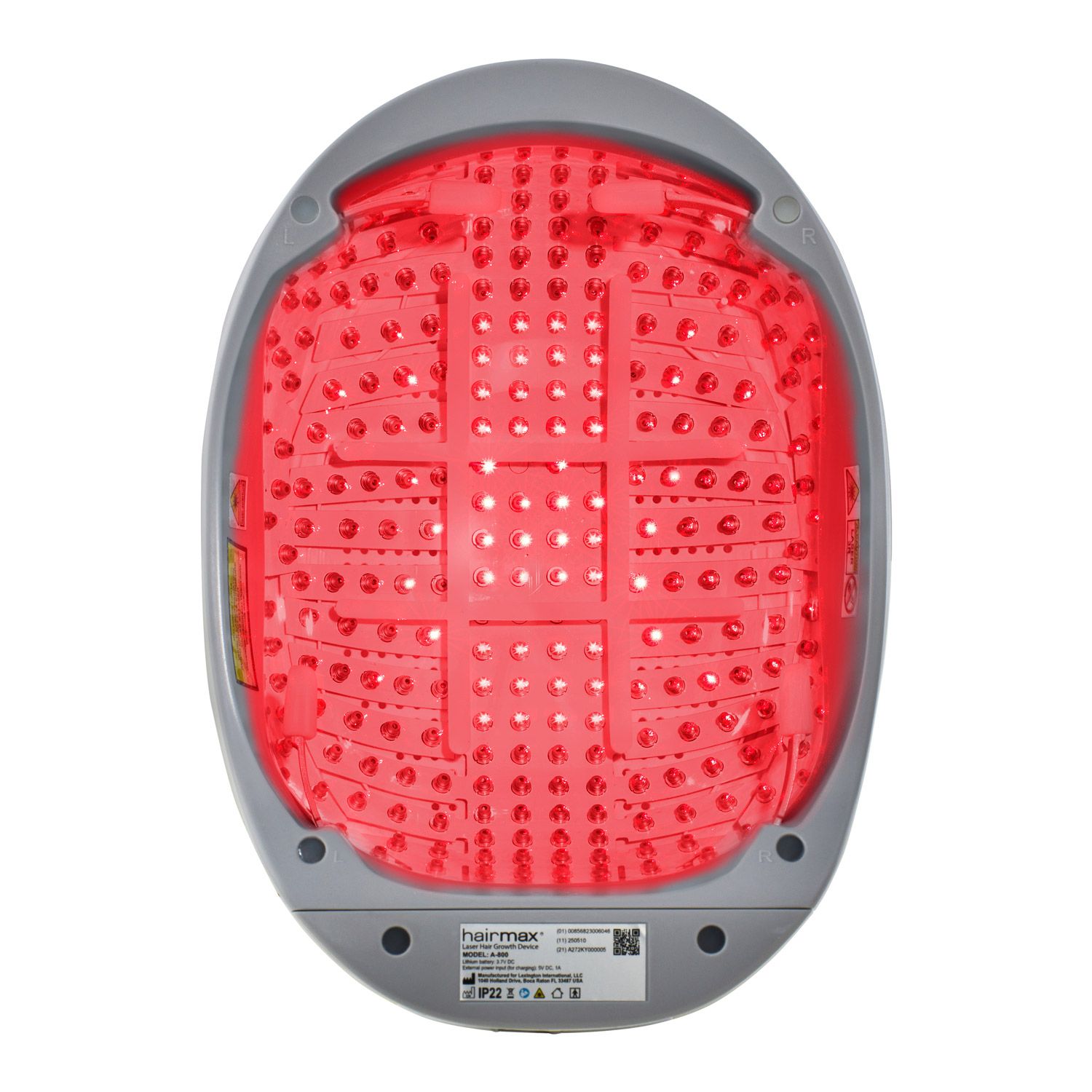 | 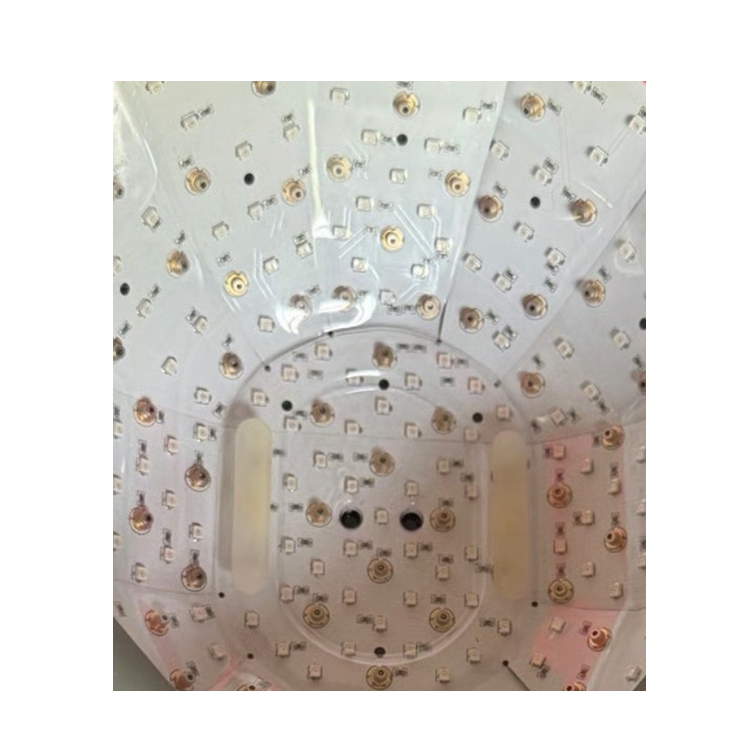 | 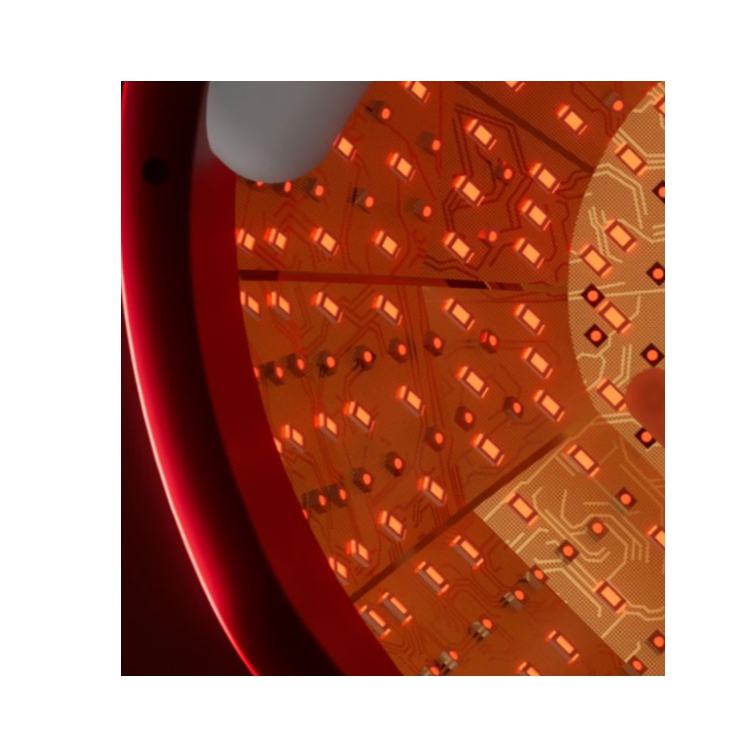 |
| Hairmax Lumina 100% Medical Grade Lasers Evenly Spaced High density for complete coverage | iRestore Basic Mostly LED and very few Lasers Random Arrangement of Lasers Low Density of Lasers | iRestore Pro Mixed LED and Laser Random uneven Distribution of Lasers Low Density Laser Light |
 | ||
| Criteria | HairMax | iRestore |
|---|---|---|
| FDA Cleared for Hair Loss | Yes - Based on HairMax Studies | Yes - Based on Laser Clearance Not LED |
| Uses Only Low-Level Laser Therapy (LLLT) | Yes | No - Contains LEDs |
| Medical Grade Lasers | Yes | No |
| Hands-Free Designs | Yes | Yes |
| Devices Designed for Hair Loss Stages | Yes | No - Only 1 Design for Advanced Hair Loss |
| Cordless / Rechargeable | Yes | Yes |
| Hair Parting Teeth | Yes | No |
| Comfort Flex Designs | Yes | No |
| Fast Treatment Time | Yes | No |
| Designed for At-Home Use | Yes | Yes |
| Suitable for Men | Yes | Yes - Advanced Stage Only |
| Suitable for Women | Yes | No - Hair Volume Hinders Light Penetration |
| Published Peer Reviewed Studies | Yes | No |
| Money-Back Guarantee Offered | Yes | Yes |
Did you know that HairMax is one of the only low-levelLaser Therapy (LLLT) devices with multiple peer-reviewed studies published on PubMed?A search for “HairMaxâ€� on PubMed returns several clinical trials demonstratingthe efficacy of their laser devices. PubMed - HairMax
By contrast, a similar PubMed search for iRestoreyields no studies specifically evaluating that brand. PubMed - iRestore
This shows that iRestorelacks published, independent clinical trials to validate its own device.iRestore’s marketing seems to rely on more general LLLT researchrather than studies of their specific product.
- All of the HairMax studies use Medical Grade Lasers (e.g., 655 nm), with no LEDs. For example, a randomized, sham-controlled trial with the HairMax LaserComb showed a statistically significant increase in terminal hair density after 26 weeks using Laser Exclusively compared with sham devices, ie. non-laser or LED. Laser Vs Sham LED Device
- A systematic review of LLLT for androgenetic alopecia found that all of the rigorously designed trials involved laser-based devices exclusively. Low Level Laser Therapy (LLLT).
LEDs are used in “budgetâ€� devicesbecause they are cheaper—not because they are as effective. Only lasers at specific wavelengths are able penetrate deep enough into the scalp to reach hair follicles, which originate in the fatty tissue layer several milimeters elow the surface of the scalp. LEDs just don't penetrate deep enough and are therefore ineffective for treating hair loss.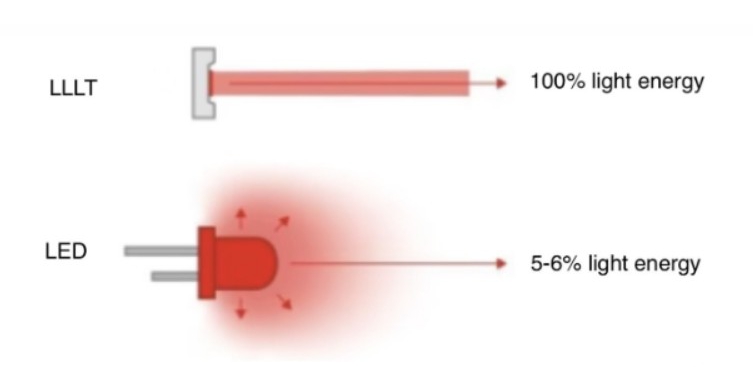
Top: Laser Light is collimated and focused, delivering nearly 100% of its energy directly into the target tissue.
Bottom: LED light scatters in all directions, so only about 5-6% of its energy actually reaches the target area. Therefore it is unable to penetrate skin to the follicle level.
This is why LED's, not lasers, are used for facial skin rejuvenation. If LEDs were trulyeffective for hair regrowth by stimulating follicles deeply, they would also promote excessive facial hair when used for skin rejuvenation.Since that isn’t a common side effect, it raises questions about whether theLED light actually reaches hair follicle depth in meaningful ways.
Another point: iRestore has claimed that lasers are “toonarrowâ€� to cover the entire scalp, which they use to justify including a largenumber of LEDs in their devices. However, HairMax devices circumvent this withan very high density of lasers that flood the entire scalp with penetrating therapeutic laser light. Hairmax Pro+2Ovid+2
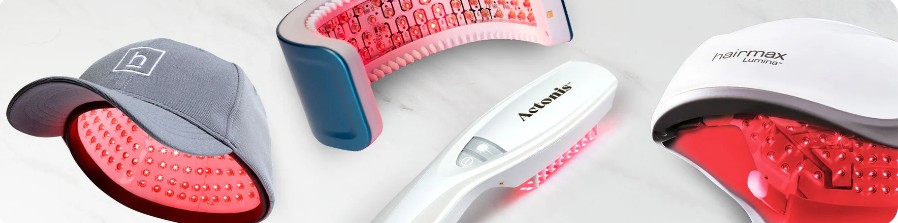
Another feature that makes HairMax devices far superior to iRestore is they have specific designs for specific stages of hair loss different budgets. The smaller laser combs are ideal for treating smaller areas like the temples in both men and women, or a small crown area. The bands are excellent for thinning hair throughout the top, sides and back of the scalp. They are suitable for all stages of both women's and men's hair loss, but particularly appropriate for earlier stages of hair loss where the amount of remaining hair can hinder the ability of the light to reach the scalp. For early stages of hair loss the Lasers Bands are far superior to caps and helmuts.
Finally, regulatory context matters. Because the FDA (andHealth Canada) often grants clearance based on “substantial equivalenceâ€�(i.e., similarity to a predicate device), companies can bring devices to marketthat mix lasers and LEDs without having to conduct their own long, costlyclinical trials. This means that not all cleared devices have the same levelof clinical validation and unfortunately, the FDA does not distinguish between LEDs and lasers. The iRestore FDA Clearance shows it received it's clearance based on a very inferior now discontinued device know as iGrow, which only had 17 lasers and a few LED's. Hear is the link to the iRestore FDA Clearance
